Have you ever read Matthew 22:14 and felt a little confused? The verse says, “For many are called, but few are chosen.” At first glance, it sounds scary or unfair. Does it mean God picks only a small group of people to save? That question has puzzled readers for centuries. People search for the Matthew 22:14 meaning because this short verse ends a longer story, and the ending line can feel like a riddle without knowing what came before it. In this article, we will break down the verse in plain, simple language. You will learn the full story behind it, what the words truly mean, and how different Christian groups understand it today.
Quick Answer
Matthew 22:14 means that God invites everyone to be part of His kingdom, but not everyone accepts the invitation in the right way. “Called” means invited. “Chosen” means the ones who truly accept and live out that invitation with a changed heart. The verse is the closing line of a parable about a king who throws a wedding feast, and one guest who shows up without the proper wedding clothes. The verse is a warning: being invited is not enough. A person’s response to the invitation matters too.
Meaning or Definition
Let’s slow down and look at the two key words in this verse.
“Called” comes from a Greek word that means invited or summoned. Think of it like getting a wedding invitation in the mail. Everyone who receives that invitation has been “called.” In the Bible, this word is used often to describe how God reaches out to all people with the message of His kingdom.
“Chosen” is a different word. It points to the ones who are picked out, set apart, or selected. In the parable that comes before this verse, many guests are invited to a wedding feast. But only some of them actually show up properly dressed and ready to celebrate. Those guests represent the “chosen.”
So the verse is really contrasting two groups. One group hears the invitation. A smaller group inside that first group truly responds the right way. Jesus is not saying God is stingy with His invitation. He is saying that not everyone who hears the good news responds to it with real faith and a changed life.
Here is a simple table to help make sense of the two key terms.
| Term | Greek Root Meaning | What It Represents in the Parable |
|---|---|---|
| Called | Invited or summoned | Everyone who hears the message of the kingdom |
| Chosen | Selected or set apart | Those who respond with genuine faith and are welcomed in |
Origin or History: The Parable of the Wedding Feast
To fully grasp the Matthew 22:14 meaning, you need to read the whole parable, found in Matthew 22:1-14. Jesus told this story to religious leaders in Jerusalem during the last week before His crucifixion. It is one of several parables he told during this time, and each one carried a pointed message for the people listening.
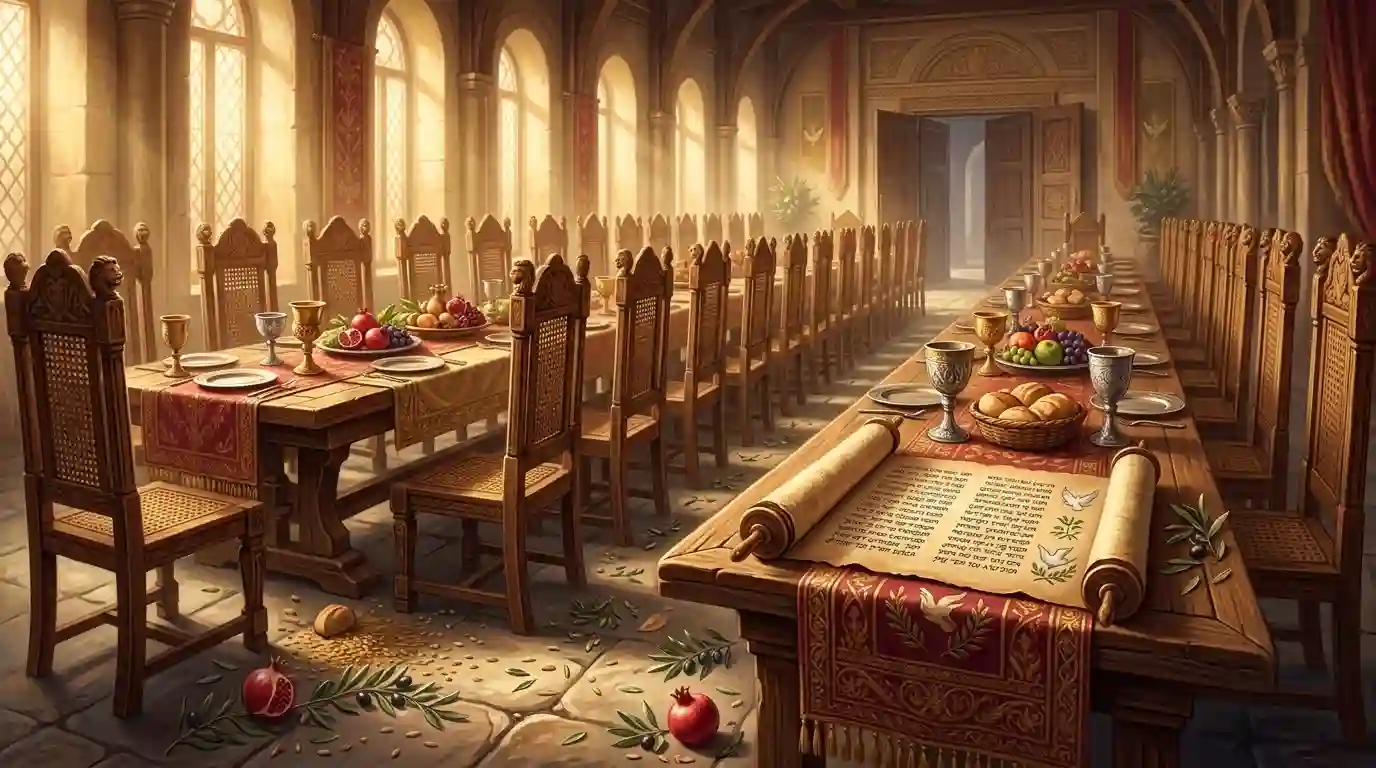
In the story, a king prepares a wedding feast for his son. He sends servants to call the invited guests, but they refuse to come. Some ignore the invitation. Others even mistreat and kill the king’s messengers. Angered by this, the king destroys those who rejected him and then sends his servants out into the streets to invite anyone they can find, good and bad alike. The wedding hall fills up with guests.
Then something unexpected happens. The king notices one guest who is not wearing proper wedding clothes. When asked why, the man has no answer. The king orders him removed from the feast. The parable ends with Jesus saying, “For many are called, but few are chosen.”
Bible scholars generally agree the story reflects the history of Israel and the spread of the gospel message to all nations. The first invited guests represent people who had every chance to accept God’s message but turned it down. The later guests, gathered from the streets, represent people from every background who are welcomed into God’s kingdom. But the man without wedding clothes is a warning. Simply showing up is not enough. A person also needs genuine faith, which the wedding garment symbolizes in the story.
Common Mistakes When Reading This Verse
Many readers misunderstand Matthew 22:14 because they read it alone, without the parable that comes before it. Here are a few common mistakes people make.
One mistake is thinking the verse teaches that God only wants to save a tiny, hand-picked group of people while ignoring everyone else. That reading skips over the fact that the king in the parable invites everyone, good and bad, from every corner of the town. The invitation is wide and generous.
A second mistake is ignoring the wedding clothes part of the story. Some readers focus only on the last line and miss the reason the guest was removed. He was not turned away for being poor or an outsider. He was removed because he refused, or failed, to accept what the king freely offered him, which many scholars believe was clothing given by the king himself for the occasion.
A third mistake is treating this verse as the only Bible passage that talks about who receives salvation. Scripture is meant to be read as a whole. Other passages, like John 3:16, stress that God’s offer goes out to the whole world. Reading Matthew 22:14 next to those verses gives a fuller, more balanced picture.
Real-Life Examples of the Verse’s Message
Thinking through everyday examples can help this ancient parable feel more real.
Imagine a school sends invitations to every student for a special event, like a free college fair with scholarships available. Every single student receives the same invitation. That is like being “called.” But only some students actually show up, fill out the forms, and follow through to get the scholarship. Those students are like the “chosen.” The opportunity was open to everyone, but only some took hold of it in a real way.
Or picture a company that opens hiring to the public. Thousands of people apply. That is the “call.” But only a handful get the job after interviews, because they showed they were truly ready and fit for the role. The rest were invited to apply, but were not selected in the end.
These modern pictures are not perfect matches for the parable, but they help explain the core idea. An open invitation and a final selection are two different things, and the Bible verse is drawing attention to that gap.
Different Interpretations Among Christian Groups
Christians throughout history have not always agreed on exactly how to apply this verse to bigger questions about salvation. Here is a simple table comparing two common viewpoints.
| Viewpoint | Main Idea | How They Read Matthew 22:14 |
|---|---|---|
| Arminian view | People have free will to accept or reject God’s offer | “Chosen” refers to those who freely choose to respond in faith and stay faithful |
| Reformed or Calvinist view | God sovereignly chooses who will be saved | “Chosen” points to God’s deliberate selection, though the call still goes out widely |
Both groups agree the invitation goes out broadly to all people. Where they differ is in explaining why some people respond and others do not. This article does not aim to settle that centuries-old debate, but it is helpful for readers to know that thoughtful, faithful Christians read this verse in more than one way.
Tips for Understanding and Applying This Verse
If you want to study Matthew 22:14 well, here are a few practical tips.
Always read it together with the full parable in Matthew 22:1-14, not as a stand-alone sentence. The context changes how the final line lands.
Compare it with other parables Jesus told around the same time, such as the parable of the two sons and the parable of the tenants, found earlier in Matthew 21. These stories share similar themes about invitation, response, and readiness.
Think about the wedding clothes as a picture of a changed, sincere heart rather than just outward behavior. Many Bible teachers connect this imagery to being clothed in righteousness through faith, a theme found in other parts of Scripture as well.
Use a study Bible or trusted commentary if you want a deeper look at the original Greek wording. This can help you see shades of meaning that get lost in translation.
Finally, apply it personally rather than only academically. Ask yourself what it looks like to not just hear a message but to truly live it out.
FAQs
What does “many are called but few are chosen” mean in simple words?
It means a lot of people hear God’s invitation to His kingdom, but only some truly accept it and live it out. Hearing the message is not the same as fully responding to it.
Is Matthew 22:14 saying God does not want to save everyone?
No. The parable shows the king inviting everyone, even people gathered randomly off the street. The invitation is wide and open to all. The verse is about how people respond, not about God limiting who gets invited.
Who is the man without wedding clothes in the parable?
He represents someone who accepts the outward invitation but does not accept what the king offers to make him ready for the feast. Most scholars see this as a picture of someone without genuine faith.
Why did Jesus tell this parable?
Jesus told it to religious leaders in Jerusalem during His final week of ministry. It challenged those who thought they were automatically included in God’s kingdom because of their religious status, while people they looked down on might actually be welcomed in.
Is Matthew 22:14 connected to predestination?
Some Christian traditions use this verse when discussing predestination, while others focus more on human free will. Both readings appear in serious, respected Bible scholarship, so it is worth studying more than one viewpoint.
Where else in the Bible is a similar idea found?
A similar phrase appears in Matthew 20:16, at the end of the parable of the workers in the vineyard. It carries a related message about God’s ways not always matching human expectations.
Conclusion
Matthew 22:14 is a short verse, but it carries a big message wrapped inside a memorable story. The Matthew 22:14 meaning centers on the difference between being invited and truly responding. God’s call goes out widely, reaching people from every background, yet the verse reminds us that hearing an invitation is only the first step. What matters just as much is how a person answers that call. Reading this verse alongside its full parable, rather than by itself, gives a much clearer and fairer picture of what Jesus was teaching. The next time you come across this verse, remember the wedding feast, the open doors, and the guest without proper clothes. It is a story about invitation, readiness, and the kind of response that truly counts.

Hi, I’m Mishi, a content writer and researcher specializing in meanings, interpretations, and informative explanations. With 2 years of experience creating clear, engaging, and SEO-friendly content, I help readers understand the meanings behind words, phrases, names, symbols, numbers, and everyday expressions.
My goal is to provide simple, accurate, and easy-to-understand information that answers readers’ questions while making every topic interesting and useful.