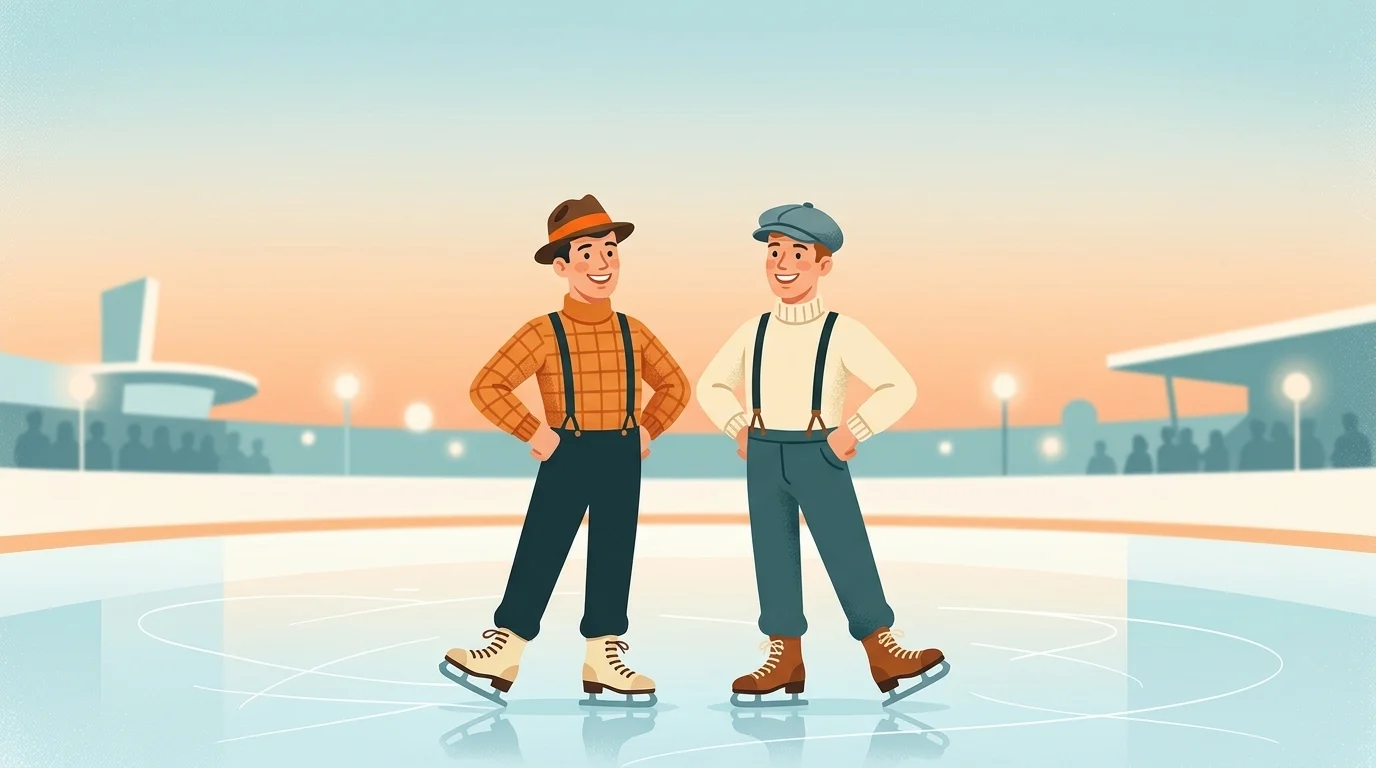
Have you ever heard someone say two people are “just like Frick and Frack”? If you scratched your head wondering what that meant, you are not alone. Frick and Frack is a fun, old-fashioned way to describe two people who are always together, almost like a matched set. They act alike, they show up together, and you rarely see one without the other. This saying has been around for decades, and it still pops up in conversations, news stories, and even TV shows today. In this article, you will learn exactly what Frick and Frack means, where the phrase came from, how to use it correctly, and some fun real-life examples. By the end, you will be able to use this phrase like a pro.
Quick Answer
“Frick and Frack” means two people (or sometimes two things) that are almost always together and seem to act, think, or move as one unit. It can be used in a friendly way, like describing best friends, or in a slightly joking or critical way, like describing two people who always cause trouble together. Think of it as another way to say “two peas in a pod” or “inseparable pair.”
Meaning or Definition
At its heart, Frick and Frack is a nickname people use for any duo that seems joined at the hip. It does not refer to specific people anymore (although it started that way, which we will explain in the next section). Instead, it has become a general phrase, kind of like calling someone “a real Einstein” without meaning the actual scientist.
Here are the main ways people use the phrase:
- To describe two close friends who do everything together
- To describe two coworkers, teammates, or partners who are known as a pair
- To describe two people who look alike or act alike
- To poke fun at two people who are always causing mischief together
- To describe any two things that are usually paired or mentioned together
The tone can shift depending on the situation. If a parent says, “My kids are like Frick and Frack,” they probably mean their kids are close buddies who play together all day. But if a teacher says, “Watch out for Frick and Frack in the back row,” they might be hinting that two students like to cause trouble as a team.
This flexibility is part of why the phrase has stuck around for so long. It works in warm, funny, and even slightly critical situations, all depending on how it is said.
Origin or History
The story behind Frick and Frack is actually pretty charming, and it comes from real history rather than folklore.
Frick and Frack were the stage names of two Swiss ice skaters, Werner Groebli and Hans Mauch. They went to the United States in 1937 and joined the original Ice Follies show. Groebli performed as “Frick,” and Mauch performed as “Frack.”
They were known for skating in traditional Alpine lederhosen while doing wild and eccentric tricks on the ice, including a move called the “cantilever spread-eagle,” which Groebli invented, and Mauch’s “rubber legs” trick, where he twisted and bent his legs while gliding in a spread-eagle position. These moves were so difficult that only a handful of skaters have ever managed to copy them since.
So where did the goofy names actually come from? According to Hans Mauch’s son, Michael, “Frick” was taken from the name of a small village in Switzerland, while “Frack” is a Swiss-German word for a frock coat, which Mauch used to wear during the early days of their act. The two skaters put the words together as a playful Swiss joke.
Frick and Frack became stars through the Ice Follies, a traveling ice show that was promoted by brothers Eddie and Roy Shipstad, starting in 1936 and running for nearly 50 years. The duo also appeared in movies, which helped spread their fame even further across the country.
Because their partnership lasted so long, and because they became so famous together, their paired names eventually became a common expression in everyday language. People started using “Frick and Frack” to describe any two people who seemed inseparable, funny, or matched as a set, even if those people had never skated a single lap on the ice.
Over time, the phrase spread into newspapers, TV shows, and everyday conversation. It has even been used by celebrities and politicians to describe close partnerships. For example, one well-known pair from a famous pop group has jokingly called each other Frick and Frack, showing just how far the phrase has traveled from its ice-skating roots.
Grammar or Correct Usage
Using “Frick and Frack” correctly is simple once you know a few small rules.
It would sound strange to use it for a group of three or more. You also do not need to say “the” before it in most casual sentences, although “the Frick and Frack of the office” is a common style too.
Here is a simple breakdown of correct usage patterns:
| Usage Pattern | Example Sentence | Correct or Incorrect |
|---|---|---|
| Describing two close friends | “Sam and Alex are like Frick and Frack.” | Correct |
| Describing three people | “Sam, Alex, and Jordan are like Frick and Frack.” | Incorrect |
| Using it as a nickname for a pair | “Here come Frick and Frack again.” | Correct |
| Capitalizing the names | “frick and frack” (lowercase) | Usually incorrect in formal writing |
| Using it for objects, not just people | “These two apps are like Frick and Frack; you can’t use one without the other.” | Correct |
Also, most people connect the phrase with “like” or “just like,” as in “they’re just like Frick and Frack,” rather than saying someone “is” Frick and Frack directly.
One more small grammar note: the phrase works as a noun phrase, so it usually needs a linking verb such as “is,” “are,” or “were” before it in a sentence. You would not typically use it as a verb or an adjective on its own.
Common Mistakes
Even though the phrase is short, people sometimes get it wrong. Here are the most common mix-ups.
The biggest mistake is mixing up the order or spelling, turning it into “Frack and Frick” or misspelling it as “Frik and Frack.” While word order usually does not change the meaning much, sticking with the traditional “Frick and Frack” order keeps your writing sounding natural and familiar to readers.
Another common error is using the phrase for a negative or serious situation where it does not quite fit. Since Frick and Frack has a light, almost playful tone, using it to describe something very serious, like a tense business rivalry involving fraud, can feel oddly mismatched. It fits best with lighthearted or mildly mischievous situations.
Some people also confuse this phrase with similar-sounding expressions like “Frick and Frack” versus “Frick, Frack, and Frock” (which is not a real common phrase) or “Frick or Frack,” which changes the meaning entirely since “or” suggests a choice between two things rather than a pairing.
Lastly, a few writers forget that this phrase describes a pair, not a solo person. Saying “He is a total Frick and Frack” does not quite work grammatically, since the phrase needs two people to make sense.
Real-Life Examples
Seeing the phrase in action can make its meaning click much faster. Here are several ways it shows up in daily conversation, writing, and media.
In sports commentary, a broadcaster might say, “Those two point guards move the ball so well together, they’re like Frick and Frack out there.” This highlights teamwork and a strong bond between two players.
In an office setting, a coworker might joke, “Here come Frick and Frack from accounting, always finishing each other’s sentences.” This shows a friendly, slightly teasing tone about two people who are always together.
In journalism, the phrase has shown up in political writing as well. One writer described two colleagues working on a congressional investigation as the “Frick and Frack” of congressional intelligence, earning praise for helping guide a difficult inquiry despite resistance from the White House. This example shows how the phrase can add a bit of personality to otherwise formal reporting.
In pop culture, members of a famous boy band have jokingly called each other Frick and Frack as nicknames for one another, showing how the phrase has stuck around in modern entertainment too.
Parents often use it for siblings or best friends. A mom might say, “My two boys are inseparable, total Frick and Frack, always building something together in the backyard.” This captures the warm, affectionate side of the phrase.
Current Usage or Trends
Even though the original Frick and Frack skated their last shows decades ago, the phrase itself is far from retired. You will still hear it in casual conversation, especially among older generations who grew up with the phrase as part of everyday slang.
The phrase also appears in news writing, blog posts, and even social media captions describing best friends, comedy duos, or work partners. It has a nostalgic, slightly retro charm that writers sometimes use on purpose to add personality to their sentences.
Interestingly, the phrase has also inspired playful spin-offs. One organization even created a joking term, “Frickin’ Frackin’,” to describe two sides in a heated debate, showing how flexible and creative people can get with the original phrase.
While it may not be as common as newer slang terms, Frick and Frack remains a recognizable and useful expression, especially in American English, for describing any tight-knit pair.
Tips or Best Practices
If you want to use “Frick and Frack” naturally and correctly, keep these tips in mind. Save it for lighthearted situations rather than serious or formal ones, since the phrase carries a playful tone. Feel free to use it in casual writing, conversation, or even light-hearted news commentary, but avoid it in very formal documents like legal papers or academic essays.
Pay attention to tone. A warm smile while saying it usually signals affection, while a raised eyebrow or sarcastic tone can suggest mild criticism or teasing. Context and delivery matter just as much as the words themselves.
Here is a quick reference table to help you decide when the phrase fits best.
| Situation | Does “Frick and Frack” Fit? | Why |
|---|---|---|
| Describing best friends who do everything together | Yes | Matches the playful, close-bond meaning |
| Describing a serious business scandal | No | Tone is too lighthearted for serious topics |
| Describing two mischievous kids or coworkers | Yes | Captures a fun, teasing tone well |
| Describing a formal business partnership in a legal document | No | Too casual for formal writing |
| Describing two sports teammates who work well together | Yes | Highlights teamwork in a friendly way |
Following this simple guide will help the phrase land naturally, without sounding forced or out of place.
FAQs
Where did the phrase Frick and Frack come from?
It came from two Swiss ice skaters, Werner Groebli and Hans Mauch, who performed together under those stage names with the famous Ice Follies show starting in the late 1930s.
Is Frick and Frack always a compliment?
Not always. It can be a warm compliment about close friendship, or a light joke about two people who always cause a bit of trouble together, depending on the tone used.
Is Frick and Frack still used today?
Yes, although it is a bit old-fashioned, it still shows up in casual conversation, news writing, and entertainment, especially to describe close duos.
Does Frick and Frack work for groups of three or more people?
Using it for a larger group would not match its traditional meaning.
Conclusion
“Frick and Frack” is one of those charming, old-school phrases that has managed to stick around for nearly a century. What started as the stage names of two talented Swiss ice skaters has turned into a popular way to describe any close, inseparable duo, whether that is best friends, coworkers, teammates, or even two matching objects. The phrase carries a light, playful tone, making it perfect for casual conversations, fun nicknames, or friendly teasing. Now that you know where it came from and how to use it correctly, you can confidently drop “Frick and Frack” into your next conversation whenever you spot a pair who seem impossible to separate. Just remember to keep the tone light, use it for exactly two people or things, and enjoy the little slice of history hiding inside this fun phrase.

Hi, I’m Rubab, a content writer and meaning enthusiast with over 2 years of experience creating clear, engaging, and informative content about words, names, phrases, expressions, and their meanings. I focus on making complex or confusing meanings easy to understand through simple and reader-friendly explanations. My goal is to provide accurate, useful, and engaging content that helps readers quickly find the information they are looking for.