If you own a home, you have probably seen the term “tax assessed value” on a piece of mail from your county. Maybe it confused you.
That’s normal. Tax assessed value meaning is simple: it’s the dollar amount your local government gives your property to figure out how much property tax you owe.
It is not the same as what your home could sell for. Many homeowners mix these two up, and that mix-up can cost money or cause worry when a new bill shows up.
In this guide, you’ll learn exactly what tax assessed value means, how it’s calculated, how it’s different from market value, and what to do if you think yours is wrong.
Quick Answer
Tax assessed value is the number a local tax assessor assigns to your property. Governments use this number, along with a tax rate, to calculate your yearly property tax bill. It’s usually a percentage of your home’s market value, and it does not update as often as real estate prices do.
Meaning or Definition
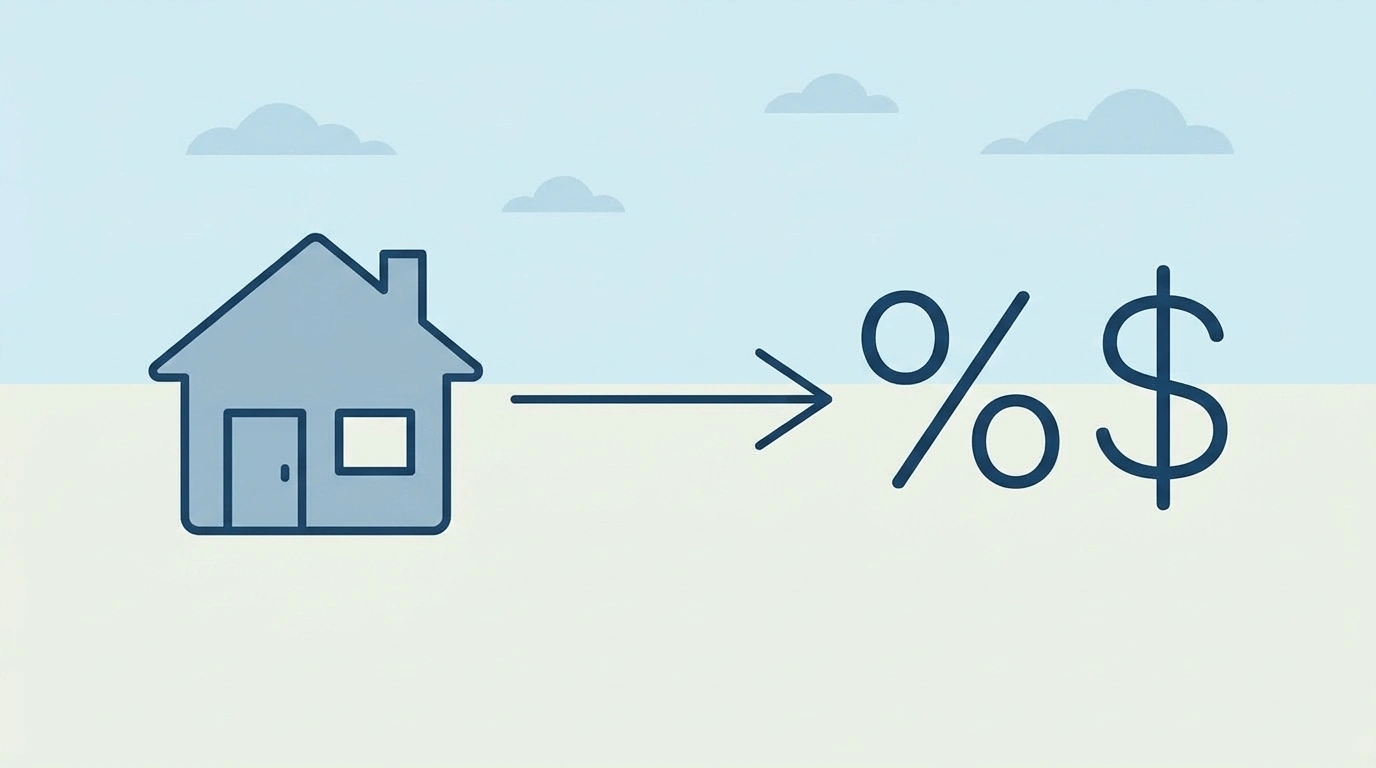
Let’s break this down in plain words. “Assessed value” is an estimate. A local government worker, called a tax assessor, looks at your property and gives it a value. This isn’t a guess pulled from thin air. Assessors use records like recent home sales in your area, the size of your lot, your home’s age, and any upgrades you’ve made.
Once that number is set, your city or county multiplies it by a tax rate (sometimes called a mill rate) to figure out what you owe each year. So the assessed value isn’t really about what your house is “worth” in a buyer’s eyes. It’s a tool for tax purposes only.
Here’s a simple way to remember it: think of assessed value as the government’s version of your home’s value, made specifically to calculate your tax bill fairly compared to your neighbors.
Assessed Value vs. Market Value
This is where most confusion happens, so let’s clear it up with a table.
| Feature | Assessed Value | Market Value |
|---|---|---|
| Purpose | Used to calculate property taxes | Used to buy or sell a home |
| Set by | Local government tax assessor | Real estate market, buyers, appraisers |
| How often it changes | Every 1–5 years, depending on the area | Changes constantly with the market |
| Usually higher or lower? | Often lower than market value | Reflects current market conditions |
| Who uses it | Local government, tax office | Buyers, sellers, real estate agents, lenders |
In many places, assessed value is calculated as a percentage of market value. For example, some counties assess homes at 80% or 90% of what they’d likely sell for. Other areas assess at 100%. This percentage is called the “assessment ratio,” and it varies a lot depending on where you live.
So if your neighbor’s house just sold for $350,000, don’t panic if your assessed value says $280,000. That gap might be completely normal for your area.
How Assessors Calculate Your Property’s Value
Assessors don’t just pick a number randomly. They usually rely on a mix of methods.
The most common approach is the sales comparison method. This means the assessor looks at what similar homes near you have recently sold for. If three houses just like yours sold for around $300,000, your home will likely be assessed close to that range.
Some areas also use the cost approach. This method estimates how much it would cost to rebuild your home from scratch today, then subtracts wear and tear from age.
A third method, mostly used for rental or commercial properties, is the income approach. This looks at how much money a property could generate if rented out.
Most residential assessments lean heavily on the sales comparison method because it’s the most realistic reflection of neighborhood value.
Why Assessed Value Matters
Your assessed value directly affects your wallet. Here’s why it matters:
Property taxes fund important local services. Schools, road repairs, police departments, fire stations, and public libraries are often paid for through property tax revenue. When your assessed value goes up, your tax bill usually goes up too, unless your local tax rate goes down to balance it out.
It’s also worth knowing that assessed value can affect refinancing or home equity decisions in some cases, even though lenders typically rely more on market value or an independent appraisal.
Real-Life Example

Let’s say Sarah owns a home in a mid-sized town. Her county assesses properties at 85% of market value. Her home’s market value, based on recent nearby sales, is about $260,000.
Here’s the simple math:
$260,000 × 0.85 = $221,000 assessed value
If her local tax rate is 1.2%, her yearly property tax would be:
$221,000 × 0.012 = $2,652 per year
This example shows why understanding your area’s assessment ratio matters. Two homes with the same market value could have very different tax bills if they’re in different counties with different ratios.
How Often Does Assessed Value Change?
This depends heavily on where you live. Some counties reassess property values every year. Others do it every two, three, or even five years. A few states have laws that limit how much assessed value can increase annually, even if home prices are rising fast.
For example, some states cap yearly increases at a small percentage, like 2% or 3%, to protect homeowners from sudden tax spikes during a hot housing market. Other states have no cap at all, meaning your assessed value could jump significantly if home prices in your area rise quickly.
Common Mistakes Homeowners Make
Many homeowners misunderstand this topic in a few common ways.
One mistake is assuming assessed value equals market value. As we covered, these numbers are often very different.
Another mistake is ignoring the assessment notice that arrives in the mail. Skipping it means missing your chance to appeal if the number seems wrong.
Some homeowners also forget that upgrades, like a new kitchen or an added bedroom, can raise their assessed value at the next review. It’s smart to expect a bump after major renovations.
Lastly, people sometimes panic when their assessed value rises, assuming their tax bill will rise by the same percentage. That’s not always true, since tax rates can shift too.
What to Do If You Think Your Assessment Is Wrong
If your assessed value seems way too high compared to similar homes nearby, you have the right to appeal it in most areas.
Here’s a simple table showing the typical appeal process:
| Step | What You Do |
|---|---|
| 1. Review your notice | Check the assessed value and property details for errors |
| 2. Research comparable homes | Look up recent sales of similar homes nearby |
| 3. Gather evidence | Collect photos, sale records, or a recent appraisal |
| 4. File an appeal | Submit paperwork to your local assessor’s office by the deadline |
| 5. Attend a hearing | Present your evidence to a review board, if required |
| 6. Wait for a decision | The board will approve, deny, or adjust your assessment |
Appeals don’t always work, but if the assessor made an error, like listing the wrong square footage, you have a good chance of getting it corrected.
Tips for Understanding Your Tax Assessed Value
A few simple habits can help you stay on top of this every year.
Check your assessment notice as soon as it arrives instead of setting it aside. Compare your assessed value to homes similar to yours in size and location. Ask your local assessor’s office how often reassessments happen in your area. Keep records of any home improvements, since these can affect future assessments. And if something looks off, don’t hesitate to ask questions or start an appeal early, since most areas have strict deadlines.
FAQs
Is tax assessed value the same as what I could sell my house for?
No. Assessed value is used only for calculating property taxes. Market value reflects what buyers are actually willing to pay.
Why is my assessed value lower than my home’s market value?
Many areas use an assessment ratio, meaning homes are taxed on a percentage of market value, not the full amount.
Can I appeal my tax assessed value?
Yes. Most counties allow homeowners to appeal if they believe the assessed value is inaccurate or unfairly high.
Does a higher assessed value always mean higher taxes?
Not necessarily. Local tax rates can change too, so your final bill depends on both the assessed value and the current rate.
How often does assessed value get updated?
This varies by location. Some areas reassess yearly, while others do it every few years.
Do home renovations affect my assessed value?
Yes. Major upgrades like additions, new roofs, or kitchen remodels can increase your assessed value at the next review.
Conclusion
Understanding tax assessed value meaning helps you make sense of your property tax bill instead of feeling confused by it.
Remember, assessed value is a tool used by your local government to calculate taxes fairly, and it’s usually different from your home’s real market value.
Knowing how it’s calculated, how often it changes, and how to appeal it if needed puts you in control.
The next time your assessment notice arrives, you’ll know exactly what to look for and how to respond with confidence.

Hi, I’m Mishi, a content writer and researcher specializing in meanings, interpretations, and informative explanations. With 2 years of experience creating clear, engaging, and SEO-friendly content, I help readers understand the meanings behind words, phrases, names, symbols, numbers, and everyday expressions.
My goal is to provide simple, accurate, and easy-to-understand information that answers readers’ questions while making every topic interesting and useful.