Have you ever heard the word “revocation” in a legal show or read it in a document and wondered what it actually means? You are not alone.
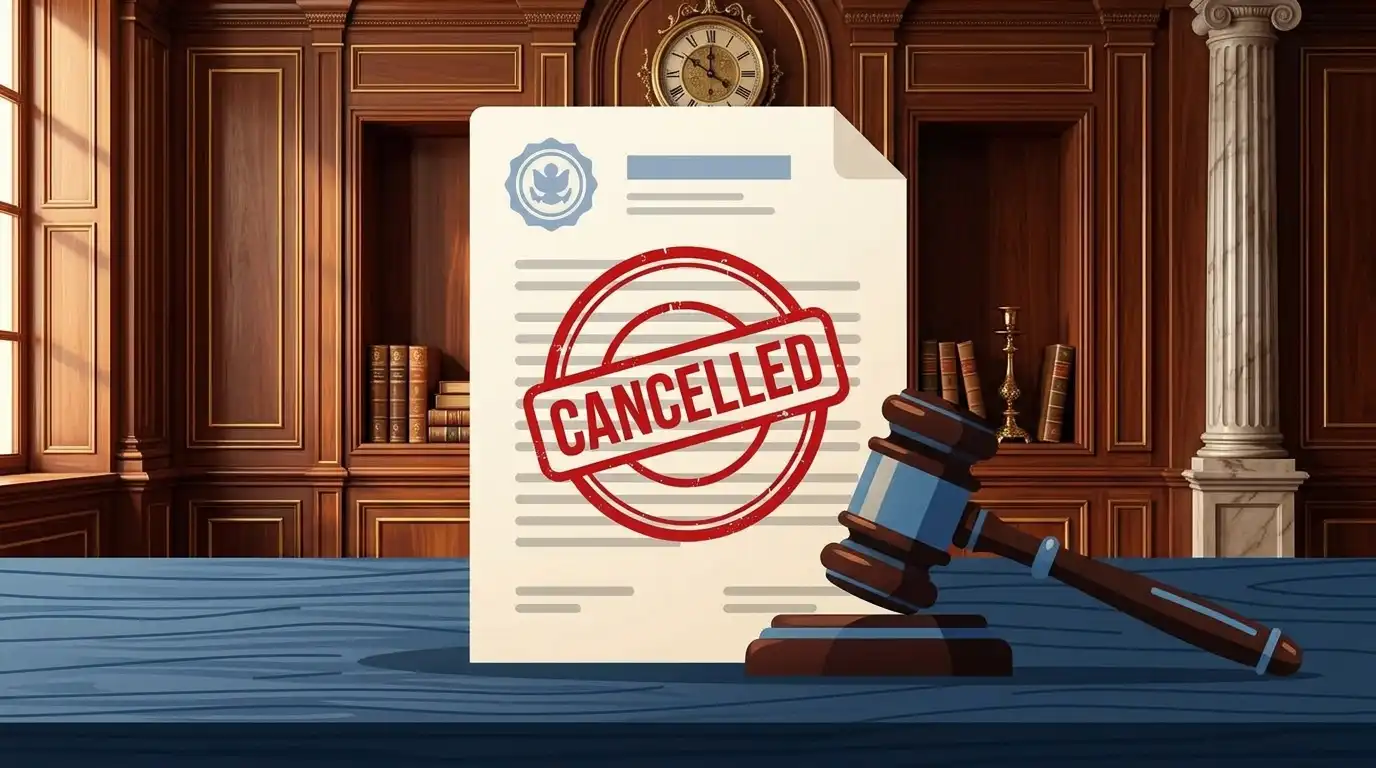
The revocation meaning in law is simple: it means to officially cancel or take back something that was given before.
This could be a will, a license, an offer, or even a contract. Courts, lawyers, and everyday people use this word a lot, but it can still feel confusing.
In this article, we will break down what revocation means, how it works, and why it matters. By the end, you will understand this term clearly and confidently, without needing a law degree.
Quick Answer
Revocation in law means canceling something that was legally valid before. When a person or authority revokes something, they take away its power or effect. For example, if a state revokes your driver’s license, it is no longer valid. If someone revokes their will, the old will no longer counts. Revocation is different from just forgetting about something or letting it expire on its own. It is an active choice to end something’s legal effect.
Meaning or Definition
At its core, revocation is the act of canceling, withdrawing, or undoing something that had legal power. The word comes from a Latin root meaning “to call back.” So when something is revoked, it is being “called back” or reversed.
In law, revocation can apply to many things. A person can revoke an offer they made to someone else. A government can revoke a business license. A person can revoke a will they wrote years ago. In each case, the thing being revoked was valid until the moment it was canceled.
It’s important to know that revocation usually requires a clear action. You cannot revoke something by accident. Someone has to take a deliberate step, like writing a new document, sending a notice, or filing paperwork with a court or agency.
Here is a simple table showing common types of revocation:
| Type of Revocation | What Gets Canceled | Who Can Revoke It |
|---|---|---|
| Revocation of a will | An old will or part of it | The person who made the will |
| Revocation of an offer | A contract offer before acceptance | The person who made the offer |
| Revocation of a license | Driving, business, or professional license | Government agency or licensing board |
| Revocation of probation | Early release from probation terms | A judge |
| Revocation of consent | Permission given earlier | The person who gave consent |
Grammar or Correct Usage
Revocation is a noun. It refers to the act or process of canceling something. The verb form is “revoke.” For example, you would say, “The judge signed the revocation,” or “The company revoked the contract.”
People sometimes confuse revocation with related words like “rescission” or “termination.” While these words seem similar, they are not always the same in a legal sense. Rescission usually means undoing a contract as if it never existed, almost like hitting a reset button. Termination often means ending something because its natural time is up, or because both sides agreed to stop it. Revocation, on the other hand, is a one-sided cancellation of something that was valid.
Another common mix-up is between revocation and expiration. Expiration happens naturally, like when a coupon expires because time has run out. Revocation is different because someone actively chooses to cancel it before that natural end point.
Real-Life Examples
Let’s look at how revocation shows up in everyday life, since it’s easier to understand with real examples.
Imagine Sarah wrote a will five years ago, leaving her house to her cousin. After a falling out, she decides to write a new will and cancels the old one. This is revocation of a will. The old will has no legal power anymore.
Now think about a driver who gets several speeding tickets. The state may decide to revoke that person’s driver’s license. This means the person can no longer legally drive until the license is reinstated or reissued.
Here’s another example. A man offers to sell his car to a friend for $3,000. Before the friend accepts, the man changes his mind and tells the friend the offer is no longer available. This is revocation of an offer, and it is allowed in most contract situations as long as the other person has not already accepted.
Probation revocation is another common example. If someone is on probation instead of serving jail time, but they break the rules of probation, a judge might revoke that probation. This often means the person has to serve the original sentence.
Common Mistakes
Many people confuse revocation with cancellation in general conversation, but in legal writing, the word carries more weight. Revocation almost always suggests that something had legal authority or effect before being undone.
Another mistake is thinking revocation always needs a court. This is not true. A person can revoke their own will without going to court, as long as they follow the correct legal steps, like writing a new will or destroying the old one with the intent to cancel it.
Some people also believe that once something is revoked, it can never come back. This is not always true either. In some cases, like a revoked license, a person can apply to have it reinstated later. In other cases, like a will, a person could technically create a new document reviving old terms, though this depends on state law.
It’s also easy to mix up “void” and “revoked.” Something that is void was never valid in the first place, like a contract signed under fraud. Something that is revoked was valid, but someone chose to cancel it.
Current Usage or Trends
Revocation continues to be a widely used legal term today, especially in areas like estate planning, contract law, and licensing. With more people creating digital wills and using online legal services, questions about how to properly revoke a will have become more common. Many states require specific steps, such as a written statement or physical destruction of the old will, to make revocation valid.
In the world of business, license revocation is also a hot topic. Professional boards, such as those overseeing doctors, lawyers, and contractors, often revoke licenses when someone violates ethical or safety rules. This protects the public and holds professionals accountable.
Revocation of consent has also become more discussed in recent years, especially in areas involving medical treatment and data privacy. People are learning that they have the right to revoke consent they gave earlier, whether it’s for a medical procedure or for a company to use their personal information.
Tips or Best Practices
If you ever need to revoke something legal, it helps to follow a few smart steps. First, always put your revocation in writing. Verbal statements can be hard to prove later if there is ever a dispute.
Second, make sure you follow your state’s specific rules. Laws about revoking wills, contracts, or consent can vary depending on where you live. What works in one state might not be enough in another.
Third, notify the right people. If you revoke an offer, make sure the other person actually receives that notice before they accept. If you revoke a will, tell your executor or attorney so there is no confusion later.
Finally, keep proof of your revocation. Save copies of documents, emails, or notices. This protects you if anyone questions whether the revocation was valid.
Here is a helpful table summarizing key tips:
| Situation | Best Practice |
|---|---|
| Revoking a will | Put it in writing and destroy the old copy |
| Revoking a contract offer | Notify the other party before they accept |
| Revoking consent | Communicate clearly and keep a record |
| Revoking a license | Follow the agency’s appeal or reinstatement process |
FAQs
What is a simple definition of revocation in law?
Revocation means officially canceling something that was legally valid before, like a will, offer, license, or agreement.
Can revocation be undone?
Sometimes. A revoked license may be reinstated, but a revoked will usually needs a brand-new document to bring back old terms.
Is revocation the same as termination?
Not exactly. Termination often happens by agreement or when something naturally ends, while revocation is usually a one-sided cancellation.
Do I need a lawyer to revoke a will?
Not always, but a lawyer can help make sure you follow your state’s rules correctly so the revocation holds up legally.
Can an offer be revoked at any time?
Generally yes, as long as the other person has not already accepted it or paid for the option to keep it open.
What happens if a court revokes probation?
The person may have to serve the original sentence, such as jail time, instead of continuing under probation rules.
Conclusion
Understanding the revocation meaning in law helps you make sense of many everyday legal situations, from wills to licenses to contracts.
At its heart, revocation is about taking back something that once had legal power. It requires a clear, intentional act, not just letting something quietly expire.
If you are updating a will, canceling an offer, or learning why a license was revoked, knowing this term gives you more confidence when dealing with legal matters.
If you are ever unsure how to properly revoke something important, it’s always wise to speak with a legal professional to make sure you do it correctly.

Hi, I’m Rubab, a content writer and meaning enthusiast with over 2 years of experience creating clear, engaging, and informative content about words, names, phrases, expressions, and their meanings. I focus on making complex or confusing meanings easy to understand through simple and reader-friendly explanations. My goal is to provide accurate, useful, and engaging content that helps readers quickly find the information they are looking for.