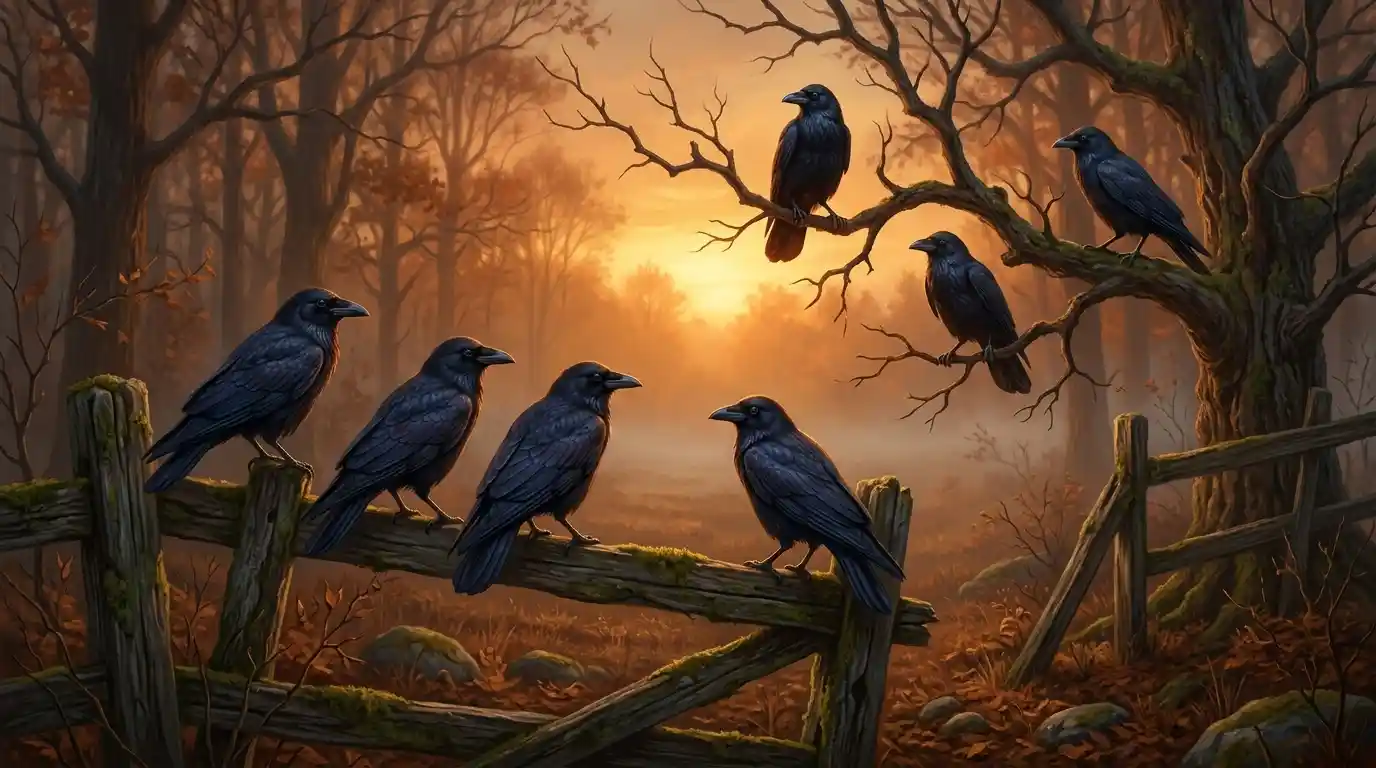
Have you ever seen a group of crows in your yard and wondered if it meant something? You are not alone. The number of crows meaning comes from an old folk rhyme that says every crow count carries its own message, from sorrow to joy to secrets and gold. People have shared this idea for hundreds of years, passing it down through stories and songs. In this article, you will learn what each number of crows is said to mean, where this belief came from, and how people use it today. Whether you are curious, a little superstitious, or just love birds, this guide will answer your questions in a simple and clear way.
Quick Answer
The short version comes from an old rhyme: one crow means sorrow, two mean joy, three mean a girl, four mean a boy, five mean silver, six mean gold, and seven mean a secret never to be told. This saying is part of folklore, not science, but many people still enjoy it and share it today. It is meant to be fun and reflective, not a hard rule about your future.
Meaning or Definition
The number of crows meaning is a folk belief that ties the amount of crows you see at one time to a certain message or outcome in your life. This idea is closely linked to a nursery rhyme called “One for Sorrow,” which many people believe was originally about magpies but got mixed with crow lore over time. Crows and magpies belong to the same bird family, called corvids, so their symbolism often overlaps in folk tales.
Here is the most common version of the meaning behind each number.
| Number of Crows | Traditional Meaning |
|---|---|
| 1 | Sorrow or bad news |
| 2 | Joy or good news |
| 3 | A girl or new beginning |
| 4 | A boy or a birth |
| 5 | Silver or wealth coming |
| 6 | Gold or great fortune |
| 7 | A secret that should not be shared |
Some versions of the rhyme continue past seven, adding meanings like eight for a wish, nine for a kiss, and ten for a surprise. These extra lines are less common and vary by region and family tradition.
It is worth noting that crows are very smart birds. Scientists have studied them for years and found that crows can solve problems, remember faces, and even use simple tools. So while the folklore is fun to think about, the real reason you might see different numbers of crows often comes down to food, weather, or nesting season rather than any hidden message.
Origin or History
The roots of counting crows for meaning trace back to old European folklore, especially in England and Scotland. The original rhyme is widely believed to be about magpies, a bird closely related to crows. Farmers and country folk used to watch birds closely because birds were seen as messengers between the human world and the unknown.
Crows have long held a special place in myths across many cultures.
Over time, especially in the United States and Britain, the crow-counting rhyme spread through stories, songs, and children’s games. Because crows are more common in many neighborhoods than magpies, especially in North America, people naturally began applying the same meanings to crows instead. This is likely why today most people search for “number of crows meaning” rather than asking about magpies.
Real-Life Examples
Let’s look at how people commonly use this belief in everyday life.
Imagine you step outside in the morning and see one lone crow sitting on a fence. According to the old rhyme, this might be seen as a sign of sorrow or a hard day ahead. Many people who believe in this folklore say they simply pause, take a breath, and stay a little more careful that day. It is more about mindset than an actual warning.
Now picture seeing two crows sitting together on a wire, calling back and forth. Traditionally, this is viewed as a sign of joy or good news. Some people say seeing two crows after a hard time makes them feel a little more hopeful, even if it is not scientific proof of anything.
Another common example is seeing three or four crows near a home where a baby is expected. Family members might mention the old saying, half-joking, that three crows point to a girl and four point to a boy. It becomes a fun conversation starter rather than a real prediction.
Seeing six or seven crows gathered at once is rarer and often sparks more curiosity. Some people online share photos of large crow groups, called a “murder of crows,” and joke about hidden treasure or secrets, tying back to the old five, six, and seven meanings.
These examples show that most people today enjoy the folklore as a light-hearted tradition rather than treating it as fact.
Current Usage or Trends
In recent years, the number of crows meaning has grown popular again thanks to social media. Short videos and posts about bird folklore, spiritual signs, and nature symbolism get shared often, especially among people interested in nature, spirituality, or old sayings passed down from grandparents.
Crows also show up a lot in discussions about spirit animals and symbolism. Many spiritual writers describe crows as symbols of change, intelligence, and mystery. This connects naturally with the older folk rhyme, blending old superstition with newer ideas about signs and personal meaning.
At the same time, bird experts and scientists continue to study real crow behavior. Crows often gather in groups for practical reasons, such as finding food, staying safe from predators, or preparing to migrate. Large groups are more common in fall and winter when crows roost together at night for warmth and safety. So while folklore assigns meaning to numbers, the real explanation is usually tied to nature and survival.
This mix of old belief and new curiosity is why the topic remains popular in searches today. People want both the fun folklore answer and a little bit of the real science behind it.
Tips or Best Practices
If you enjoy thinking about crow symbolism, here are some simple and respectful ways to explore it.
First, treat the meanings as folklore, not fact. It is perfectly fine to enjoy the tradition without expecting it to predict your future.
Second, pay attention to the full picture, not just the number. Notice how the crows are behaving. Are they calm, loud, feeding, or flying away quickly? Context can make the moment feel more meaningful, even if it is just for fun.
Third, learn a bit about real crow behavior. Knowing that crows are intelligent, social birds can make watching them more interesting, whether or not you believe in the folklore.
Fourth, if you want to share the tradition with kids or family, treat it as a fun rhyme or game rather than something to fear. The original poem was often used as a playful children’s rhyme, not a serious warning.
Finally, remember that different cultures have different crow beliefs. If you are researching this topic for writing, teaching, or personal interest, it helps to mention that meanings can change depending on the region, culture, or family story.
Common Mistakes
Many people confuse this crow-counting rhyme with an exact prediction system, but it started as a general folk rhyme, not a fixed rule. It is also a common mistake to think this rhyme was always about crows. Most historians point to magpies as the original bird in the poem, with crows joining in later through popular use.
Another mistake is assuming there is only one version of the meanings. Because this is folklore, versions differ by family, country, and even generation. Two people might tell you different meanings for the number five, and both would be sharing a true piece of oral tradition.
Lastly, some people treat crow sightings as guaranteed signs of doom or fortune. It is more accurate, and more responsible, to present this as a cultural belief that many find comforting or intriguing rather than a scientific fact.
FAQs
What does it mean if you see one crow?
In the traditional rhyme, one crow is often linked to sorrow or a warning of bad news. Many people see it as a moment to pause rather than a certain sign that something bad will happen.
What does it mean if you see two crows?
Two crows are traditionally seen as a sign of joy, happiness, or good news on the way. Some people feel encouraged when they spot a pair of crows together.
Where did the number of crows meaning come from?
It comes from old European folklore, most likely originally about magpies, later applied to crows in places like the United States where crows are more commonly seen.
Is there any scientific proof behind crow number meanings?
No, there is no scientific evidence supporting these meanings. Crows gather in different numbers mainly due to food availability, safety, and the season, not hidden messages.
Why do crows gather in large groups?
Crows are highly social birds. They often gather for safety in numbers, to share information about food sources, and to roost together at night, especially during colder months.
Is seeing a lot of crows a bad sign?
Not according to science. A large group of crows, sometimes called a murder of crows, usually just means good feeding grounds or a safe roosting spot nearby, not a bad omen.
Conclusion
The number of crows meaning is a charming piece of folklore that has lasted for generations, blending old superstition with a bit of everyday wonder.
While one crow is said to bring sorrow and two bring joy, and the numbers continue on with meanings like wealth and secrets, none of this is backed by science.
Crows are intelligent, social birds that gather based on food, safety, and season, not hidden signs.
Still, there is nothing wrong with enjoying this old rhyme as a fun tradition or a moment of reflection when you spot these clever birds.
The next time you see crows outside your window, you can smile, count them, and enjoy the story behind the number

Hi, I’m Mishi, a content writer and researcher specializing in meanings, interpretations, and informative explanations. With 2 years of experience creating clear, engaging, and SEO-friendly content, I help readers understand the meanings behind words, phrases, names, symbols, numbers, and everyday expressions.
My goal is to provide simple, accurate, and easy-to-understand information that answers readers’ questions while making every topic interesting and useful.