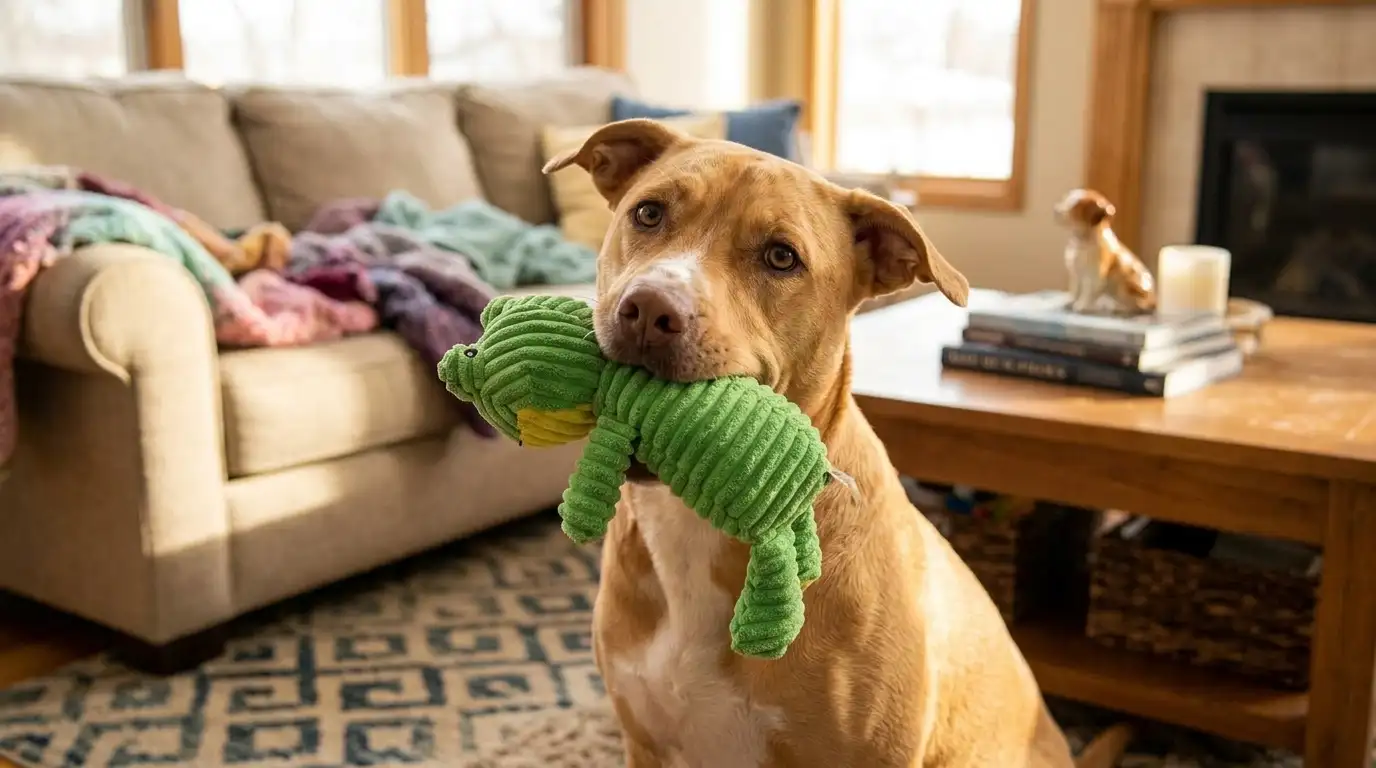
When your dog pulls their ears back flat against their head, it’s their way of “talking” to you without words. Dog ears back meaning usually points to fear, stress, submission, or sometimes pure excitement, depending on the rest of their body language. This small movement tells you a lot about how your dog feels in that exact moment.
Dogs can’t use words, so they use their bodies instead. Ears are one of the most expressive parts of a dog’s face. If you learn to read them, you’ll understand your dog so much better. In this article, you’ll learn what pinned-back ears really mean, how to tell the difference between fear and happiness, and what to do when you see this behavior in your own dog.
Quick Answer
Ears pinned back against the head usually mean your dog feels scared, anxious, submissive, or overstimulated. It’s rarely a sign of aggression by itself. To understand it correctly, you need to look at the whole dog: their tail, mouth, posture, and the situation around them. Context is everything.
What Pinned-Back Ears Really Mean
A dog’s ears sit in a relaxed, natural position most of the time. When something changes in their environment, the ears move first. Pulling the ears back and flattening them against the skull is a defensive posture. It makes the ears less of a target if a fight breaks out, and it’s also tied to a stress response in the nervous system.
Here’s the key idea to remember: ears back is not one single emotion. It’s a physical reaction that can show up during fear, nervousness, submission, pain, or even joyful greetings. The trick is learning to read the other signals happening at the same time.
Think about how humans clench their jaw when they’re upset, but also when they’re concentrating hard on something. One physical sign, several possible causes. Dog ears work the same way.
Common Reasons Dogs Pin Their Ears Back
Dogs flatten their ears for many different reasons, and most of them are completely normal. Below is a breakdown of the most common causes and what usually goes along with each one.
| Reason for Ears Back | Other Body Signals to Watch For |
|---|---|
| Fear or anxiety | Tail tucked, body lowered, panting, trembling |
| Submission | Rolling over, avoiding eye contact, licking lips |
| Excitement or greeting | Wiggly body, wagging tail, relaxed mouth |
| Pain or discomfort | Stiff movement, whining, reluctance to be touched |
| Aggression (less common) | Stiff body, bared teeth, hard stare, growling |
Notice that fear and submission look similar, but excitement looks very different. A dog greeting their favorite person often pins their ears back while wiggling their whole body with joy. That’s a happy dog, not a scared one.
Pain is another reason people miss. If an older dog suddenly starts holding their ears back during walks or while eating, a vet visit is a smart next step. Sudden changes in behavior often point to something physical going on.
How to Tell Fear From Happiness
This is the part that confuses a lot of dog owners, so let’s break it down clearly. The ears alone won’t give you the full picture. You need to check three other things at the same time: the tail, the mouth, and the overall body posture.
A frightened dog usually holds their body low and tight. Their tail tucks between their legs, and their movements look stiff or frozen. Some dogs also lick their lips repeatedly or yawn when they’re not tired, which are both signs of stress.
So when in doubt, zoom out. Don’t just watch the ears. Watch the whole dog acting together as one picture.
Grammar and Correct Usage of the Phrase
People search this phrase in a few different ways, and all of them mean the same thing. “Dog ears back,” “dog’s ears pinned back,” and “why does my dog flatten his ears” are all asking about the same behavior. Grammatically, “ears back” works as a short description, almost like a snapshot, rather than a full sentence on its own.
In a full sentence, you’d usually write it like this: “My dog’s ears were pinned back when the vacuum turned on.” Notice the possessive form, “dog’s,” which shows the ears belong to the dog. This small detail trips up a lot of writers, but it matters for clear, correct sentences.
Real-Life Examples of Ears Back Behavior
Seeing real examples helps this concept click. Here are a few common situations dog owners run into.
A dog meeting a new person for the first time might lower their head slightly, pin their ears back, and lean away. This is a nervous greeting, not aggression, and rushing toward the dog usually makes it worse.
A dog hearing thunder or fireworks often pins their ears flat, tucks their tail, and tries to hide under furniture or behind a person. This is a classic fear response, and comfort (not punishment) is the right reaction.
A dog running toward their owner at the front door, ears back, tail wagging hard, whole body wiggling, is showing pure joy. This is one of the most misunderstood examples, since the ear position looks identical to a fearful dog, but everything else about the scene says happiness.
Situations That Signal a Problem
While most ears-back moments are harmless, a few patterns are worth paying closer attention to.
| Situation | What It May Mean |
|---|---|
| Ears back plus growling and stiff body | Possible aggression or resource guarding |
| Ears back during eating or petting | Possible pain, especially in older dogs |
| Ears back constantly, even at rest | Chronic anxiety, may need vet or trainer help |
| Ears back only around one specific person | Fear or bad past experience with that person |
If you notice any of these patterns showing up again and again, it’s worth talking to a vet or a certified dog trainer. Chronic stress isn’t good for a dog’s long-term health, and it’s often treatable once you find the cause.
Tips for Responding to a Scared or Anxious Dog
Knowing what ears back means is only half the job. Knowing how to respond matters just as much.
Stay calm and speak in a soft, steady voice. Dogs pick up on tension in your voice and body, so getting anxious yourself can make things worse. Avoid direct eye contact and hovering over the dog, since both can feel threatening from a dog’s point of view.
Give the dog space and let them approach on their own terms when they’re ready. Forcing interaction with a scared dog almost always backfires and can even lead to a bite out of fear.
If the fear response happens often, try to figure out the trigger. Loud noises, strangers, other animals, and car rides are common culprits. Once you know the trigger, you can work on slow, positive exposure with the help of treats and patience, ideally guided by a professional trainer for tougher cases.
FAQs
Does ears back always mean a dog is scared?
No. It often means fear or stress, but it can also show up during excitement, submission, or even pain. Always check the tail, mouth, and body posture too.
Why does my dog pin his ears back when I pet him?
This is often a sign of enjoyment or relaxation, especially if the body is loose and the eyes are soft. It can also mean discomfort if paired with stiffness or pulling away.
Is it bad if my dog’s ears are always back?
Constantly pinned ears, even while resting, can point to chronic anxiety or an underlying medical issue. A vet visit is a good idea if you notice this pattern.
Can pain cause a dog’s ears to go back?
Yes. Dogs in pain often flatten their ears along with other signs like stiffness, whining, or avoiding touch in a certain area.
How can I tell if my dog is happy or scared with ears back?
Look at the whole body. A happy dog has a loose, wiggly body and a wagging tail. A scared dog looks stiff, tucks their tail, and tries to make themselves smaller.
Should I comfort my dog when their ears are pinned back from fear?
Yes, calm comfort is generally helpful. Speak softly, avoid forcing interaction, and give your dog space to feel safe again.
Conclusion
Dog ears back meaning depends heavily on context, and that’s the most important takeaway from this whole topic. The same physical movement can signal fear, submission, pain, or pure happiness, so the ears should never be judged alone. Always look at the tail, posture, and mouth together to get the real story.
The more time you spend watching your dog’s body language as a whole, the better you’ll get at reading their moods correctly. This skill helps you respond the right way, whether your dog needs comfort during a scary moment or just wants to celebrate you walking through the door. Paying attention to these small signals is one of the best ways to build trust with your dog.

Hi, I’m Rubab, a content writer and meaning enthusiast with over 2 years of experience creating clear, engaging, and informative content about words, names, phrases, expressions, and their meanings. I focus on making complex or confusing meanings easy to understand through simple and reader-friendly explanations. My goal is to provide accurate, useful, and engaging content that helps readers quickly find the information they are looking for.