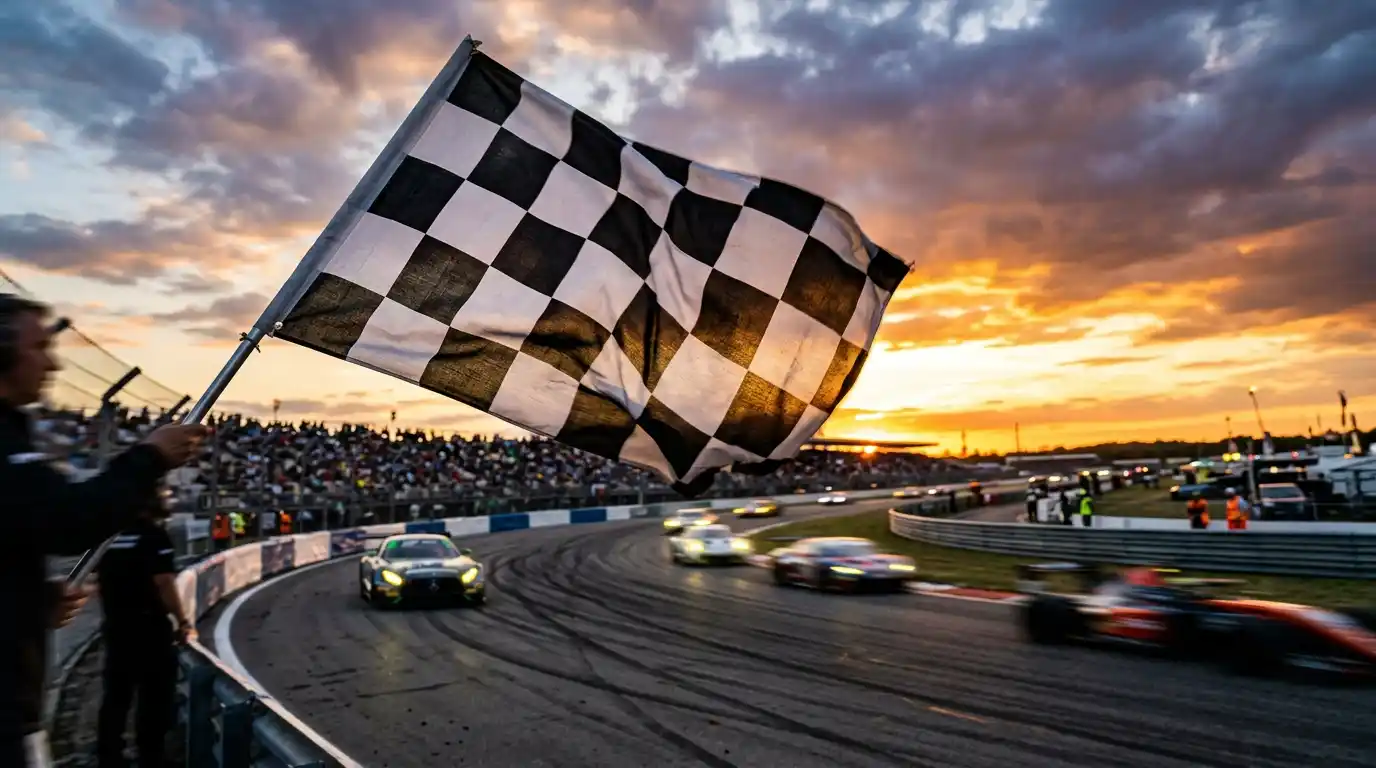
If you have ever seen a black and white flag and wondered what it means, you are not alone. This flag shows up in car races, on trucks, at protests, and even in old pirate stories.
In short, a black and white flag can mean different things depending on where you see it.
It might mean a race is over, it might show support for police, or it might stand for warning, mourning, or rebellion.
This guide walks you through every common meaning in plain, simple words, so you never have to guess again.
Flags use color on purpose. Every color sends a message before a single word is read.
Black and white together make a strong, bold message because there is no in-between shade.
That is why this flag pattern shows up in so many different places, from sports fields to city streets. Let’s break down each meaning one at a time.
Quick Answer
A black and white flag does not have just one meaning. The most common uses are the checkered flag in car racing (which means the race has finished), the black and white “thin blue line” American flag (which shows support for police officers), and old pirate flags like the Jolly Roger (which used a black background with white images to scare enemy ships). Other groups have used black and white flags to show protest, mourning, or a warning. The exact meaning always depends on the shape, symbols, and setting of the flag.
Meaning or Definition
To understand this flag, it helps to know what each color usually means on its own.
Black often stands for strength, seriousness, mourning, or resistance. People have used black flags for hundreds of years to show grief or to challenge authority. It is a color that grabs attention because it feels heavy and final.
White usually stands for peace, surrender, purity, or truth. A plain white flag has long been a signal that someone wants to stop fighting. White can also mean cleanliness or a fresh start.
When you put black and white together on one flag, you get a mix of these ideas. The flag can feel like a warning wrapped in calm, or like grief paired with hope. That is part of why this flag design feels so powerful, even without any other colors added.
Here is a simple table that breaks down what each color often means by itself:
| Color | Common Meaning | Where You Might See It |
|---|---|---|
| Black | Mourning, strength, protest, danger | Funerals, anarchist flags, warning signs |
| White | Peace, surrender, purity, truth | Peace flags, wedding themes, ceasefire signals |
| Black and White Together | Contrast, warning, tribute, rebellion | Racing, police support flags, pirate flags |
Common Types of Black and White Flags
There is no single “black and white flag.” Instead, there are several well-known flags that use just these two colors. Each one comes from a different world, and each one carries its own story. The table below lays out the most common types people search for.
| Flag Type | What It Looks Like | What It Means |
|---|---|---|
| Checkered Flag | Black and white squares in a grid pattern | A car race has ended |
| Thin Blue Line Flag | Black and white American flag with one blue stripe | Support for police officers |
| Jolly Roger | Black flag with a white skull and crossbones | Old pirate warning flag |
| Anarchist-style protest flag | Solid black flag, sometimes paired with white text or symbols | Rejection of government control |
| Black and white racing warning flag | Black and white diagonal halves | A driver is being warned for unsafe or unfair driving |
Each of these flags grew out of a very different history. Let’s look closer at where they came from.
Origin or History
The checkered flag is probably the most famous black and white flag today. Most racing historians agree it became common in American auto racing in the early 1900s, though nobody knows for certain who used it first. Over time, it became the standard sign that a race has finished, no matter which country or track you visit.
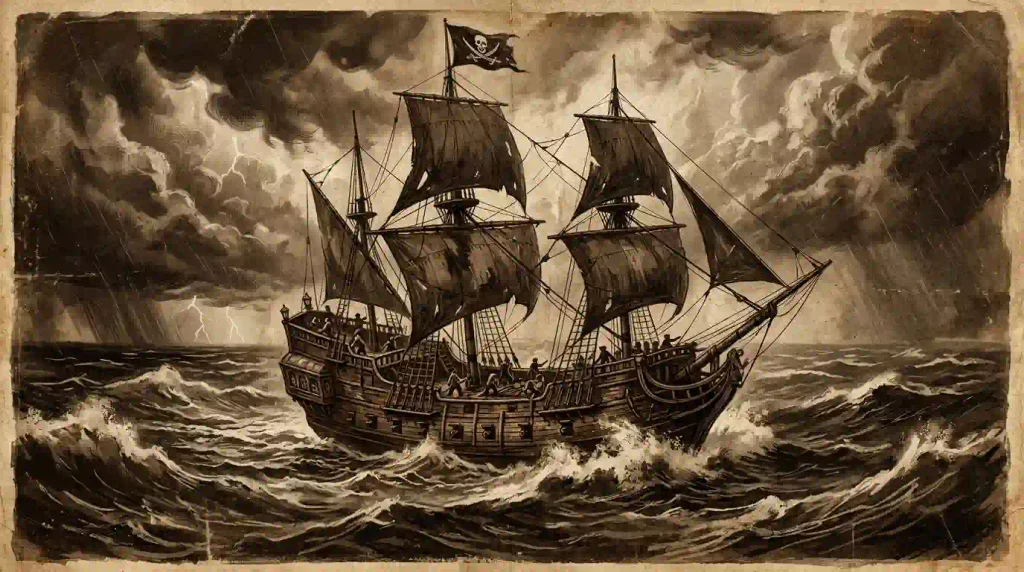
The Jolly Roger is much older. Pirates in the 1600s and 1700s flew black flags with white skulls, bones, or hourglasses to scare merchant ships into surrendering without a fight. The stark black and white design was meant to be seen from far away and to cause fear right away.
The thin blue line flag is newer. It grew out of the idea of the “thin blue line,” a phrase used since the 1800s to describe police as the line between order and chaos. In recent decades, people began printing the American flag in black and white with a single blue stripe to honor police officers, especially those who died in the line of duty. This version of the flag has also become part of larger political conversations in the United States, since some people see it as a tribute and others see it as a political statement.
Black flags used in protest have a long history too. Groups fighting against unfair governments have flown plain black flags for over a century, often because black is easy to make, easy to see, and carries a serious, no-nonsense feeling.
Real-Life Examples

Seeing how these flags show up in everyday life can make the meanings easier to remember.
At a car race, when the checkered flag waves, every driver knows the event is over. Fans cheer, and the winning driver often does a victory lap while still watching for that black and white flag waving at the finish line.
On a truck bumper or in front of a house, a black and white American flag with a blue stripe usually means the owner supports local police, often a family member or friend who serves as an officer.
In an old pirate movie or a history book, a black flag with a white skull is a quick visual clue that danger is near. Filmmakers still use this flag today because everyone instantly understands the warning, even kids who have never studied real pirate history.
At some protests, a plain black flag with no images at all sends a message of anger or refusal, showing that the group does not trust the current government or system in charge.
Current Usage or Trends
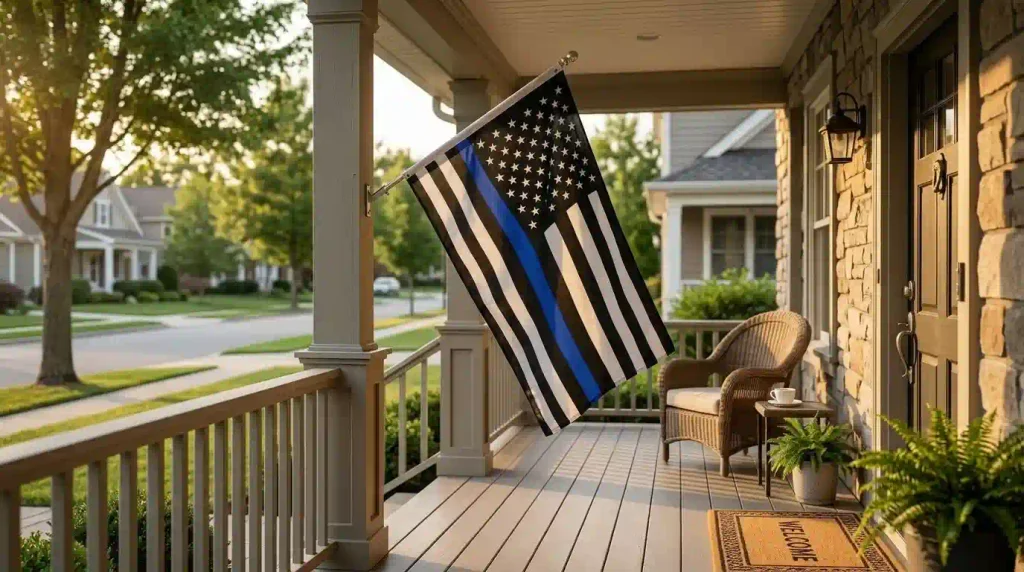
Today, the black and white flag with a blue line remains one of the most searched and most debated flags in the United States. Many police departments and supporters display it at rallies, on uniforms, and on vehicles. At the same time, some civil rights groups and city councils have raised concerns about the flag, arguing that it can feel divisive when flown at official government buildings. Because of this, a few cities have placed rules on where the flag can be displayed on public property.
In motorsports, the checkered flag remains unchanged and uncontroversial. It is still the universal sign of a finished race, used from small local tracks to Formula 1 and NASCAR.
Fashion and home decor have also picked up on plain black and white flag designs, using them simply for their bold, modern look rather than any political or historical meaning. This shows that not every black and white flag you see today carries deep symbolism. Sometimes it is just a style choice.
Tips or Best Practices
If you spot a black and white flag and want to understand it correctly, keep these tips in mind.
Look at the shape and pattern first. A grid of small squares almost always points to racing. A single flag with stars and stripes in black and white, plus one thin colored line, usually points to a support flag for police, firefighters, or another public service group.
Check for extra symbols. A skull usually means pirates or danger warnings. Plain text or a fist symbol often points to a protest movement.
Think about the setting. A flag at a racetrack means something different from the same colors on a flagpole outside a courthouse.
When in doubt, ask about the source. If someone is flying the flag, it is completely fair to ask them what it means to them personally, since the same flag can carry slightly different meanings for different people.
FAQs
What does a plain black and white flag mean?
On its own, with no symbols, a plain black and white flag usually shows contrast, protest, or a bold visual statement. The exact meaning depends heavily on where and why it is being flown.
What does the black and white American flag with a blue stripe mean?
It is known as the thin blue line flag. It is meant to honor police officers and show support for law enforcement, though it has also become a topic of public debate in some communities.
Why is the racing flag black and white?
The black and white checkered pattern is easy to see from far away, even at high speed. This made it a practical, clear choice to mark the end of a race.
What flag did pirates really use?
Many pirate ships flew a black flag with white images, such as a skull and crossbones, often called the Jolly Roger. It was meant to scare other ships into giving up quickly.
Does a black and white flag always mean protest?
No. Meaning depends on context. The same colors can point to a car race, a police support flag, or simply a modern design choice with no political meaning at all.
Is it okay to fly a black and white flag at home?
In most places, yes, flying a flag on private property is allowed. If it is a specific symbol like the thin blue line flag, some local rules may apply to flying it on public buildings, so it helps to check local guidelines if you plan to display it somewhere official.
Conclusion
A black and white flag can mean many different things, and that is exactly why so many people search for its meaning. It might signal the end of a thrilling car race, show support for local police, warn of danger the way old pirate flags once did, or express protest against unfair treatment. The colors black and white are simple, but together they create a message that is hard to ignore. The next time you spot one of these flags, take a moment to look at its shape, symbols, and setting. That small bit of context will almost always tell you exactly what the black and white flag in front of you is trying to say.

Hi, I’m Rubab, a content writer and meaning enthusiast with over 2 years of experience creating clear, engaging, and informative content about words, names, phrases, expressions, and their meanings. I focus on making complex or confusing meanings easy to understand through simple and reader-friendly explanations. My goal is to provide accurate, useful, and engaging content that helps readers quickly find the information they are looking for.